

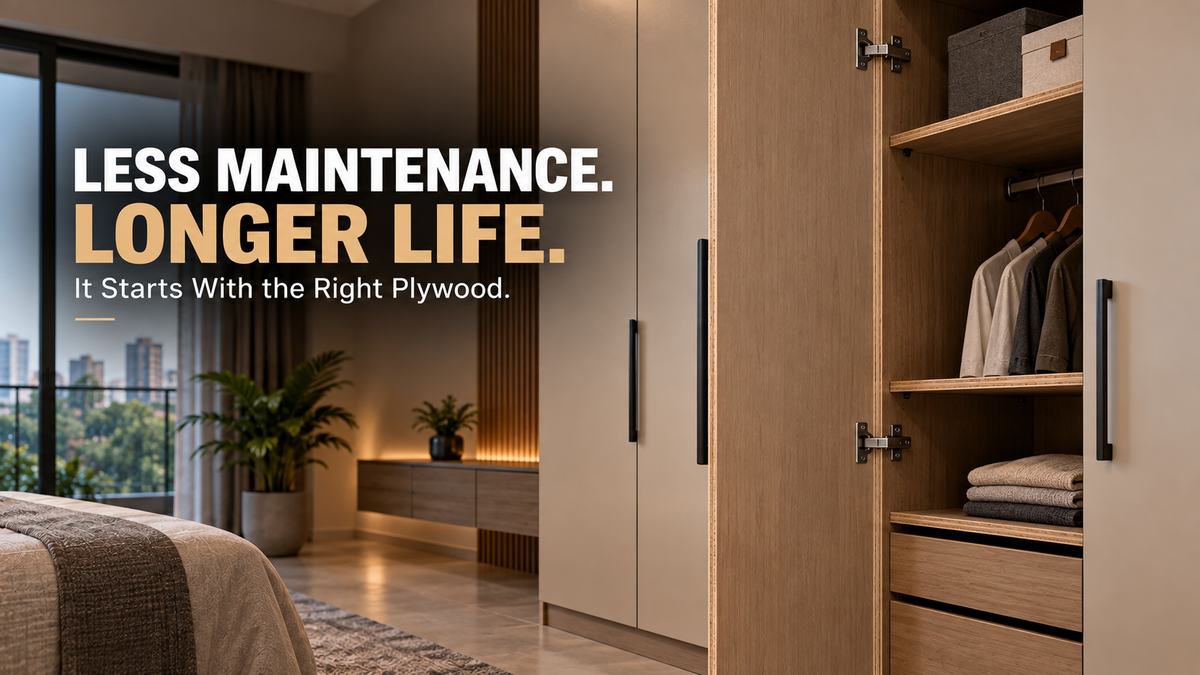
How to Reduce Furniture Maintenance with the Right Plywood
Beautiful furniture should not require constant attention.
Yet many homeowners experience problems such as loose hinges, misaligned shutters, sagging shelves, moisture damage and repeated carpenter visits only a few years after completing their interiors.
While furniture performance depends on design, hardware, workmanship and usage, the plywood underneath the finish also plays an important role.
Here are 10 ways the right plywood can help reduce furniture maintenance.
1. Match the Plywood to the Application
The first rule is simple:
Don't use the same plywood everywhere.
A bedroom wardrobe and an under-sink kitchen cabinet experience completely different conditions.
For normal dry interiors such as wardrobes, TV units and study furniture, quality MR plywood can be appropriate.
For kitchens and other water-exposed or moisture-prone applications, BWP plywood is a more suitable choice.
Correct material selection from the beginning can help prevent avoidable repairs later.
2. Choose Good Core Construction
Once plywood is covered with laminate or veneer, its internal core is hidden.
But the core continues doing the structural work.
Consistent core construction and bonding contribute to the overall performance of furniture.
Before purchasing, inspect the sheet edges for obvious gaps, irregular layers or delamination.
Good furniture starts from the inside.
3. Pay Attention to Screw Holding
Hinges and drawer channels may operate thousands of times during the life of a kitchen or wardrobe.
Every movement transfers forces through screws into the plywood.
A dependable substrate helps hardware remain securely fixed and can reduce recurring problems such as:
Loose Hinges → Misaligned Shutters → Repeated Tightening → Repair
This is especially important when using premium furniture hardware.
4. Use BWP Plywood Where Water Exposure Is Expected
One of the easiest ways to create future maintenance problems is using inappropriate plywood around moisture.
Pay particular attention to:
- Modular kitchens
- Sink cabinets
- Utility areas
- Moisture-prone storage
- Bathroom vanities where plywood is specified
BWP plywood should be considered where greater water exposure is expected.
However, even BWP plywood should not be treated as a substitute for fixing plumbing leaks or providing proper waterproofing.
5. Use MR Plywood Intelligently in Dry Areas
Reducing maintenance doesn't mean buying the most expensive plywood for every component.
Quality MR plywood can be appropriate for dry interior applications such as:
- Bedroom wardrobes
- TV units
- Study tables
- Bookshelves
- Bedroom storage
Smart specification means spending according to the application.
6. Select the Correct Thickness
Some furniture problems blamed on plywood are actually design problems.
A long shelf carrying heavy books may sag because it is too thin or inadequately supported.
Thickness should be selected according to:
Load + Span + Support + Application
For long or heavily loaded shelves, additional supports may be just as important as the material itself.
7. Protect Plywood Edges
Cut edges, drilled openings and plumbing cut-outs deserve proper attention during fabrication.
This becomes particularly important around sinks and utility areas.
Correct edge finishing can help protect vulnerable areas and reduce unnecessary moisture exposure.
Good plywood combined with poor fabrication can still lead to maintenance problems.
8. Keep Furniture Away From Persistent Dampness
Even high-quality furniture can suffer if installed against a continuously damp wall.
Before installing wardrobes or cabinets, investigate:
- Wall seepage
- Plumbing leaks
- Bathroom leakage
- Exterior-wall dampness
- Poor ventilation
Don't hide a moisture problem behind expensive furniture.
Fix the source first.
9. Pair Good Plywood With Good Hardware
Furniture works as a complete system.
Premium plywood cannot compensate for poor-quality hinges, and premium hinges cannot perform at their best when poorly installed into an unsuitable substrate.
Long-lasting furniture requires:
Good Plywood + Good Hardware + Good Design + Good Workmanship
All four matter.
10. Think About Lifecycle Cost, Not Just Purchase Price
Cheaper plywood may reduce today's quotation, but repeated repairs can gradually erase those savings.
Consider the potential cost of:
- Carpenter visits
- Hinge repairs
- Shelf replacement
- Damaged cabinets
- Re-lamination
- Hardware refitting
- Partial furniture replacement
The right material can cost more initially while potentially delivering better value over the furniture's useful life.
Quick Plywood Selection Guide
| Application | Recommended Direction |
|---|---|
| Bedroom Wardrobe | Quality MR Plywood |
| TV Unit | Quality MR Plywood |
| Study Table | Quality MR Plywood |
| Bookshelf | MR + suitable thickness/support |
| Modular Kitchen | BWP Plywood |
| Under-Sink Cabinet | BWP / suitable wet-area material |
| Utility Cabinet | BWP where water exposure is expected |
| Bathroom Vanity | BWP / suitable wet-area solution |
Conclusion
Low-maintenance furniture doesn't happen because of one product.
It comes from making several correct decisions:
Choose the right plywood grade.
Use suitable thickness.
Protect against moisture.
Specify dependable hardware.
Design adequate support.
Use good workmanship.
The most important decision is to match the material to the environment.
Use quality MR plywood for appropriate dry interiors and BWP plywood for water-exposed and moisture-prone applications.
The plywood may eventually disappear beneath the laminate, but its performance continues to matter every day.
Build It Right Once. Maintain It Less. Enjoy It Longer.
At Plyneer Industries, we offer plywood and interior material solutions for homeowners, architects, interior designers, carpenters and furniture manufacturers.
🌐 www.plyneer.com
📞 +91 8861717273


