

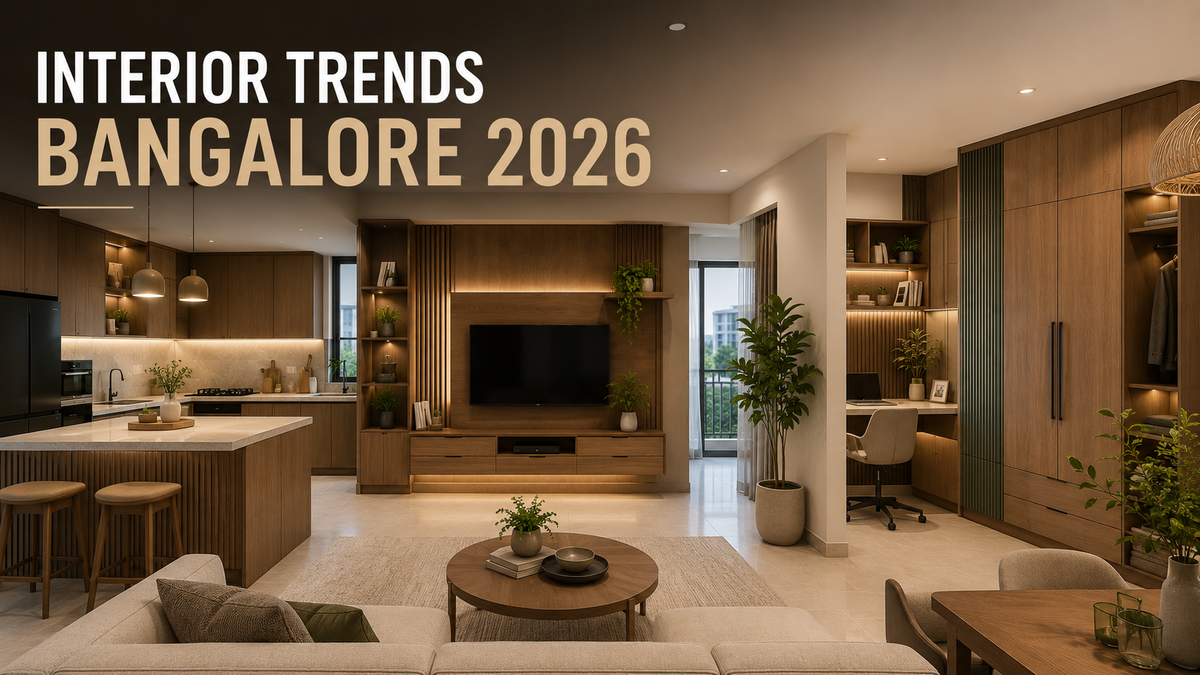
Interior Trends in Bangalore 2026
Bangalore homes are changing—and not simply because new colours or furniture styles are becoming fashionable.
In 2026, homeowners are increasingly looking for interiors that combine design, comfort, functionality, durability, and personality. Current Bengaluru design coverage points to warm minimalism, nature-inspired elements, sustainable materials, multifunctional spaces, textured surfaces, and smarter storage as important directions.
This shift makes sense for a city where apartment living, hybrid work, growing families, and changing lifestyles often require one room to perform several functions.
Here are the interior trends defining Bangalore homes in 2026—and what they mean when choosing materials for your next project.
1. Warm Minimalism Is Replacing Cold Interiors
Minimalism isn't disappearing. It's becoming warmer.
Instead of stark white rooms, glossy surfaces, and cold grey palettes, homeowners are embracing softer spaces built around warm neutrals and natural-looking finishes. Indian 2026 trend coverage highlights creamy neutrals, natural woods and deeper earthy colours as part of this shift.
Think:
- Warm whites
- Beige and sand tones
- Walnut and teak-inspired finishes
- Terracotta
- Olive and sage greens
- Soft browns
- Textured fabrics
The objective is still a clean interior—but one that feels comfortable and lived-in rather than clinical.
2. Natural Wood Looks Are Getting Stronger
Wood-inspired interiors fit perfectly into the warm-minimalist movement.
Rather than covering every surface in the same finish, designers can use wood textures strategically on wardrobes, entertainment walls, kitchen shutters, study units and feature panels.
Natural-looking veneers and woodgrain laminates can bring warmth into otherwise contemporary interiors.
The key in 2026 is balance: combine wood tones with neutral walls, stone-inspired surfaces, matte finishes and carefully selected accent colours.
3. Smart Storage Is Becoming Invisible
In Bangalore apartments, every square foot matters.
That's pushing storage away from bulky standalone furniture and toward solutions integrated into the architecture.
Expect more:
- Floor-to-ceiling wardrobes
- Concealed storage
- Under-bed storage
- Window seating with drawers
- Hidden shoe cabinets
- Integrated study desks
- Loft storage
- Multifunctional TV walls
Local 2026 trend coverage similarly highlights hidden storage and space-efficient furniture as important responses to compact urban homes.
For these applications, the quality of the underlying plywood becomes critical because shelves, hinges, channels, and fittings experience constant use.
4. Modular Kitchens Are Becoming Smarter
The kitchen continues to evolve from a purely functional room into one of the home's most carefully designed spaces.
Current Bengaluru kitchen trends emphasize sleek layouts and intelligent storage solutions.
In 2026, homeowners are looking for:
- Tall pantry units
- Corner-storage solutions
- Deep drawers
- Integrated appliances
- Soft-close hardware
- Concealed waste management
- Better internal organization
- Cleaner countertop layouts
Open kitchens and islands are also being used to make cooking spaces more social and connected to living areas.
For the cabinet structure, material selection remains crucial. BWP-grade plywood is the appropriate choice for kitchens and other moisture-prone furniture applications, particularly around sinks and utility areas.
5. Sustainability Is Moving Beyond a Buzzword
Sustainability is becoming more closely connected to how long an interior lasts, not simply how a material is marketed.
Current 2026 design coverage points toward responsibly sourced materials, reclaimed wood, bamboo, lower-emission finishes, and longer-lasting material choices.
A useful way to think about sustainability is the lifecycle.
If furniture needs replacement frequently, new materials, manufacturing, transport, and installation are required each time. Durable interiors can reduce that cycle.
For homeowners, that means looking beyond initial price and considering:
How well will this material perform 10, 15 or 20 years from now?
6. Biophilic Design Is Bringing Nature Indoors
Bangalore's connection with greenery continues to influence its interiors.
Biophilic design goes beyond placing a few plants around the house. It uses natural textures, daylight, greenery, ventilation, organic forms, and nature-inspired materials to create a stronger connection between indoors and outdoors. Bengaluru-specific 2026 trend reporting identifies nature-led design as one of the city's prominent directions.
Popular elements include:
- Indoor plants
- Natural wood textures
- Stone finishes
- Earthy colours
- Large windows
- Balcony gardens
- Organic shapes
- Natural fabrics
The result is an interior that feels calmer and more connected to its surroundings.
7. Texture Is Becoming More Important Than Gloss
For several years, ultra-glossy furniture dominated modular interiors.
In 2026, texture is taking a larger role.
Fluted and ribbed surfaces, textured wardrobe shutters, matte laminates and tactile wall finishes are being used to add depth without making rooms visually busy. Bengaluru trend reporting specifically notes textured wardrobes and fluted or ribbed shutters in contemporary projects.
This works particularly well for:
- TV walls
- Wardrobes
- Foyer units
- Bed backdrops
- Kitchen shutters
- Decorative partitions
8. The Home Office Is Becoming Part of the Home
Hybrid work has changed residential interiors permanently.
Instead of a temporary desk pushed into a bedroom corner, homeowners increasingly want workspaces that integrate naturally into their interiors.
A compact workstation can be incorporated into:
- Wardrobes
- Bookshelves
- Guest bedrooms
- Living-room storage
- Window seating
- Multipurpose rooms
This reflects a broader 2026 move toward multifunctional spaces in Bangalore homes.
9. Personalisation Is Winning Over Copy-Paste Interiors
The perfectly matched "show-flat" aesthetic is losing some of its appeal.
Homeowners increasingly want spaces that feel personal: artwork collected over time, handcrafted pieces, family objects, travel finds, statement colours and furniture that reflects individual routines.
This aligns with the broader move toward slow decorating—choosing durable and meaningful pieces over constantly replacing décor to follow short-lived trends.
The result is a home that feels designed for the people living in it, rather than designed only for photographs.
10. Better Materials Are Becoming Part of the Design Conversation
One of the most important shifts isn't visible at all.
Homeowners are becoming more interested in what lies beneath their laminates and veneers.
For furniture, questions increasingly include:
- Which plywood grade is being used?
- Is it suitable for moisture exposure?
- What is the core construction?
- How well does it hold screws?
- Which thickness is being specified?
- What warranty is provided?
- Is the material appropriate for its application?
This is a positive shift because beautiful furniture needs a reliable foundation.
A Practical Material Strategy for Bangalore Homes
| Area | Practical Material Approach |
|---|---|
| Modular Kitchen | BWP Plywood + durable laminate |
| Sink Cabinet | BWP Plywood + careful edge protection |
| Wardrobes | Quality MR or BWP Plywood |
| TV Unit | MR Plywood for normal dry interiors |
| Study Unit | MR Plywood |
| Bathroom Vanity | BWP Plywood |
| Utility Storage | BWP Plywood |
| Decorative Furniture | Plywood with laminate or veneer finish |
The exact specification should always account for design, span, loading, moisture exposure and installation conditions.
What Will Make an Interior Feel Premium in 2026?
It isn't simply expensive marble, imported furniture, or dramatic lighting.
A premium home increasingly comes down to thoughtful design and material consistency.
The most successful Bangalore interiors in 2026 combine:
Warm aesthetics + intelligent storage + quality materials + functional planning + personal character.
And importantly, they are designed to age well rather than look fashionable for only a year or two.
Conclusion
Bangalore's 2026 interior trends show a clear shift away from designing purely for appearance.
Homes are becoming warmer, smarter, more natural, more flexible and more personal. Warm minimalism, natural wood finishes, smart storage, multifunctional rooms, biophilic design and sustainable material choices are all part of this evolution.
But trends will continue to change. The materials underneath your interiors should not.
A laminate can be replaced. A wall can be repainted. Handles can be upgraded. But replacing the structural material inside an entire kitchen or wardrobe is far more difficult and expensive.
That's why good interiors start from the inside.
Why Choose Plyneer?
At Plyneer Industries Pvt. Ltd., we believe modern interiors require more than attractive finishes. They require dependable materials engineered for everyday performance.
From plywood for modular kitchens and wardrobes to laminates, veneers, MDF, HDHMR, blockboards and other interior solutions, Plyneer helps homeowners, architects, interior designers, carpenters and furniture manufacturers make smarter material choices.
Whether you're designing a compact 2BHK, a premium villa, or a commercial interior, choose materials that complement today's design while being built for tomorrow.
Trends change. Quality shouldn't. Choose Plyneer.
🌐 www.plyneer.com
📞 +91 8861717273


