

Material Selection Framework for Architects: A Practical Guide to Choosing the Right Plywood
Architects make hundreds of decisions throughout the lifecycle of a project, but few have as much long-term impact as material selection. While finishes and aesthetics shape the visual identity of a space, the materials beneath those finishes determine its durability, functionality, maintenance requirements, and overall lifecycle cost.
Plywood is one of the most widely specified materials in residential, commercial, hospitality, healthcare, and retail interiors. However, selecting plywood isn't simply about choosing a brand or thickness. Every application has unique structural, environmental, and performance requirements.
A well-defined material selection framework helps architects specify plywood with confidence, ensuring that every project delivers lasting value—not just on completion day, but for years to come.
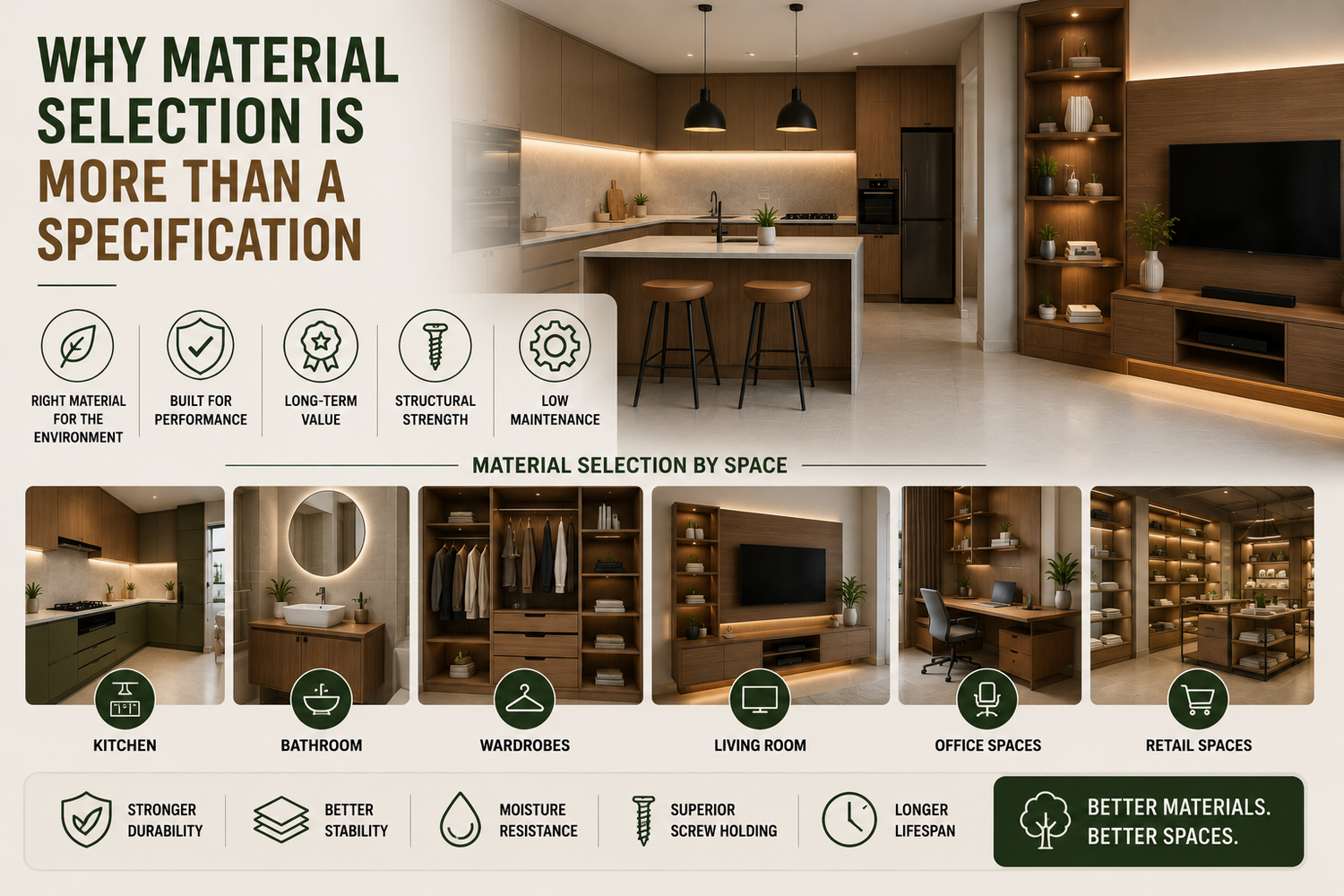
Why Material Selection Is More Than a Specification
Many interior failures don't occur because of poor design—they happen because the material chosen wasn't suitable for the application.
Common issues include:
- Swollen kitchen cabinets
- Warped wardrobe shutters
- Sagging shelves
- Loose hinges
- Delamination
- Frequent maintenance
- Premature replacement
Most of these problems can be prevented during the specification stage.
Architects who evaluate materials based on performance instead of price create interiors that age gracefully and require significantly less maintenance.
A Five-Step Material Selection Framework
Instead of asking "Which plywood is cheapest?", ask "Which plywood is best suited for this application?"
Step 1: Understand the Environment
The first consideration should always be where the plywood will be used.
| Application | Recommended Plywood |
|---|---|
| Modular Kitchen | BWP Grade |
| Bathroom Vanity | BWP Grade |
| Utility Cabinets | BWP Grade |
| Wardrobes | MR Grade |
| TV Units | MR Grade |
| Office Furniture | MR or BWP (depending on conditions) |
| Retail Fixtures | Application-specific |
| Hotel Interiors | BWP for wet areas, MR for dry areas |
Environmental conditions should drive material selection—not assumptions.
Step 2: Evaluate Performance Requirements
Every furniture element performs a different function.
Ask:
- Will it carry heavy loads?
- Will it support wall-mounted hardware?
- Is frequent opening and closing expected?
- Will it be exposed to moisture or steam?
- Does it require CNC machining?
- Will it receive premium surface finishes?
The answers determine the plywood grade and construction needed.
Step 3: Think About Lifecycle Cost
Architects increasingly design for whole-life value, not just initial cost.
A slightly higher investment in premium plywood can reduce:
- Maintenance
- Service calls
- Warranty issues
- Furniture replacement
- Client complaints
When evaluated over 20–30 years, quality materials often provide the best return on investment.
Step 4: Specify Structural Performance
Performance characteristics deserve as much attention as appearance.
Evaluate:
- Screw-holding strength
- Core construction
- Dimensional stability
- Moisture resistance
- Load-bearing capacity
- Surface consistency
- Machining quality
These factors determine how furniture performs under real-world conditions.
Step 5: Consider Maintenance Requirements
Architects should always consider how easily the finished project can be maintained.
Choose materials that:
- Require minimal repairs
- Resist everyday wear
- Maintain appearance over time
- Support easy replacement of hardware
- Perform consistently in local climatic conditions
Low-maintenance interiors improve both client satisfaction and project value.
Material Selection by Space
Kitchen
Challenges:
- Steam
- Heat
- Water
- Heavy storage
- Daily use
Recommended:
- BWP plywood
- Moisture-resistant edge sealing
- Premium hardware
Bedrooms
Requirements:
- Stable wardrobes
- Smooth drawer operation
- Long shelf life
Recommended:
- MR plywood
- Strong screw-holding capability
- Premium core construction
Living Rooms
TV units, display shelves, and entertainment walls require:
- Dimensional stability
- Premium finish quality
- CNC compatibility
- Strong shelf support
Commercial Spaces
Offices and retail environments demand:
- High durability
- Continuous daily use
- Reliable hardware performance
- Easy maintenance
Material specifications should reflect these operational demands.
Avoid These Common Specification Mistakes
Architects can improve project outcomes by avoiding:
- Using the same plywood grade throughout the building
- Selecting materials based only on price
- Ignoring humidity and moisture conditions
- Underestimating load-bearing requirements
- Overlooking hardware compatibility
- Failing to consider lifecycle costs
Every space deserves a material that matches its functional requirements.
A Practical Checklist Before Finalizing Specifications
Before approving plywood for any project, verify:
✅ Correct plywood grade for the application
✅ Suitable thickness
✅ Strong core construction
✅ Reliable screw-holding performance
✅ Moisture resistance where required
✅ Relevant IS standards
✅ Manufacturer reputation
✅ Warranty support
This checklist helps reduce future maintenance issues and improves project quality.
Why Architects Should Specify Premium Plywood
Premium plywood delivers benefits beyond structural strength.
It helps architects:
- Improve project quality
- Reduce maintenance complaints
- Extend furniture lifespan
- Enhance client satisfaction
- Increase long-term project value
- Protect design integrity
A well-designed interior deserves materials that perform as well as they look.
Conclusion
Successful architecture is built on informed material decisions. While layouts, lighting, and finishes define the appearance of a space, the quality of the underlying materials determines how that space performs over time.
By following a structured material selection framework, architects can create interiors that are stronger, more durable, easier to maintain, and better suited to the needs of modern living.
Choosing the right plywood is not just a technical decision—it's a design decision that influences the longevity, functionality, and value of every project.
Why Choose Plyneer?
At Plyneer Industries Pvt. Ltd., we work closely with architects, interior designers, builders, and contractors to provide plywood solutions that meet the demands of modern construction. Our range includes premium BWP, MR, calibrated plywood, block boards, HDHMR, and decorative interior solutions, engineered for strength, precision, and long-term performance.
With consistent manufacturing quality, excellent screw-holding strength, moisture resistance, and dependable support, Plyneer helps professionals specify materials with confidence.
Whether you're designing luxury residences, commercial offices, hospitality projects, or retail spaces, Plyneer provides reliable solutions that help bring your vision to life.
Great architecture deserves exceptional materials. Build with confidence. Build with Plyneer.
📞 +91 8861717273


