

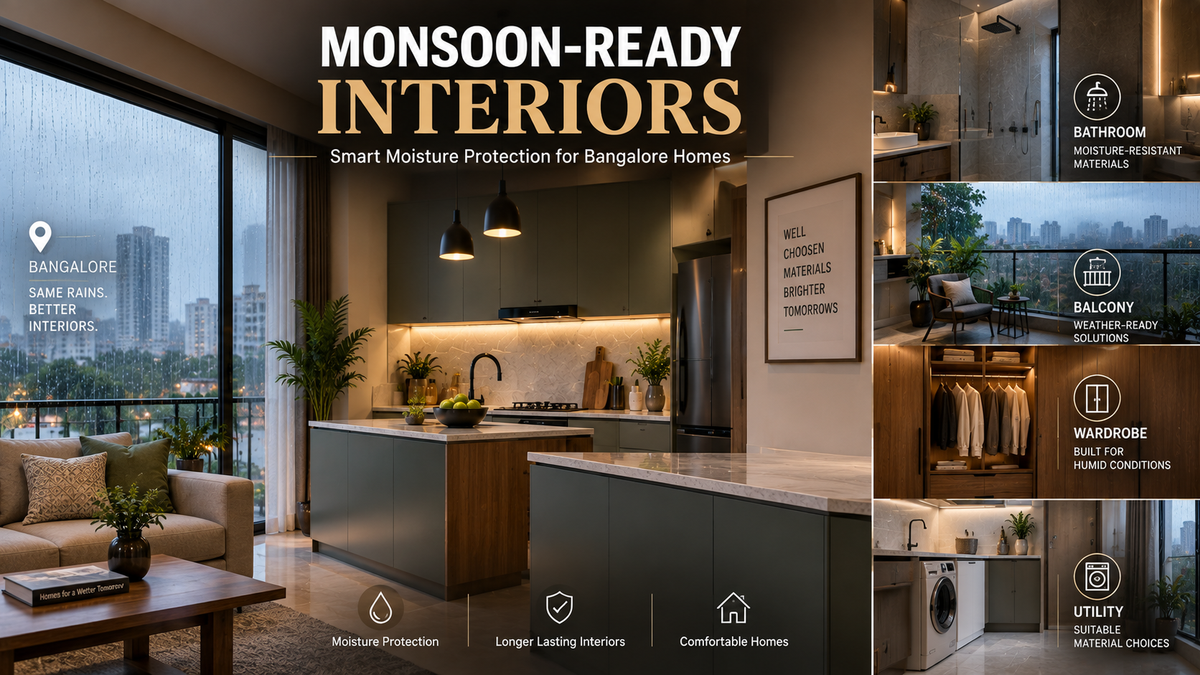
Bangalore’s monsoon weather can expose apartments to moisture problems that may remain unnoticed until paint begins peeling, furniture develops dampness or cabinets start deteriorating.
The solution isn’t simply choosing “waterproof plywood.” A well-protected apartment requires a combination of building waterproofing, plumbing maintenance, ventilation and appropriate interior materials.
Here are some practical areas to consider.
1. Identify the Source of Moisture First
Before repairing furniture or repainting a wall, identify where the moisture is coming from.
Common sources include:
- Plumbing leaks
- Bathroom seepage
- Balcony water ingress
- Exterior wall exposure
- Window gaps
- AC drain lines
- Kitchen sink leakage
- Poor ventilation
Covering a damp wall with furniture doesn't solve the underlying problem.
Stop the water first. Then repair the interior.
2. Use BWP Plywood in Kitchens
Kitchens are among the most moisture-prone areas of an apartment.
Sink cabinets, plumbing zones and frequently cleaned areas can experience accidental water exposure.
For these applications, BWP plywood is generally a more appropriate choice than MR plywood.
MR plywood is better suited to normal dry interior furniture such as bedroom wardrobes, study units and TV units.
3. Give Special Attention to Under-Sink Cabinets
The under-sink cabinet deserves extra protection.
Even a small pipe or tap connection leak can expose the cabinet to moisture for hours or days before it is noticed.
Consider:
BWP plywood + protected edges + good plumbing + accessible inspection area
Avoid designing the cabinet so tightly that leaks become impossible to detect.
4. Protect Bathroom Vanities
Bathroom furniture experiences humidity, splashes and frequent cleaning.
Material selection should therefore reflect the level of exposure. BWP plywood or another suitable wet-area material can be considered depending on the design.
Direct and prolonged water exposure should still be avoided.
Waterproof-grade material does not mean furniture can remain permanently submerged or continuously wet.
5. Don't Ignore Balconies and Utility Areas
Balconies and utility spaces can receive wind-driven rain during Bangalore's monsoon months.
Before installing storage, check:
- Wall dampness
- Floor drainage
- Window or door sealing
- Plumbing
- Rain exposure
- Ventilation
Where furniture faces predictable moisture exposure, choose materials specifically suited to those conditions.
6. Keep Wardrobes Away From Damp Walls
Bedroom wardrobes normally don't require BWP plywood simply because it rains outside.
Quality MR plywood can be appropriate for dry bedroom furniture.
But if a wardrobe is installed against a wall with recurring seepage or condensation, the moisture source should be corrected first.
Leaving appropriate ventilation or design clearance where needed can also help prevent trapped moisture.
7. Protect Plywood Edges
Cut edges and drilled areas deserve attention during fabrication.
Proper finishing and edge protection can help reduce unnecessary moisture exposure.
This is particularly important around:
- Sinks
- Countertops
- Plumbing cut-outs
- Bathroom furniture
- Utility cabinets
Good material selection and good workmanship need to work together.
8. Improve Ventilation
Moisture problems aren't always caused by visible leaks.
Poorly ventilated kitchens, bathrooms and closed storage spaces can retain humidity.
Use appropriate ventilation, exhaust systems and airflow strategies to help moisture escape.
Furniture should not become a sealed box around a damp wall.
9. Inspect Plumbing Regularly
A ₹100 plumbing problem can eventually become a much more expensive furniture problem.
Periodically inspect:
✓ Sink connections
✓ Flexible hoses
✓ Drain pipes
✓ Washing-machine connections
✓ Bathroom plumbing
✓ Water purifier connections
Early detection can prevent prolonged exposure.
10. Don't Depend on One “Waterproof” Product
A common mistake is assuming that BWP plywood alone solves every moisture problem.
It doesn't.
A better moisture-protection system is:
Waterproofing + Plumbing + Drainage + Ventilation + Correct Plywood Grade + Proper Installation
Each layer has a different job.
Quick Material Guide
| Area | Material Direction |
|---|---|
| Bedroom Wardrobe | Quality MR Plywood |
| TV Unit | Quality MR Plywood |
| Study Furniture | Quality MR Plywood |
| Modular Kitchen | BWP Plywood |
| Under-Sink Cabinet | BWP / suitable wet-area solution |
| Utility Cabinet | BWP where moisture exposure is expected |
| Bathroom Vanity | BWP / suitable wet-area material |
| High Water-Exposure Areas | Consider appropriate WPC/PVC solutions |
The correct material ultimately depends on the actual exposure and furniture design.
Conclusion
Waterproofing an apartment isn't only about protecting walls.
Your kitchen, bathroom vanity, utility storage and furniture also need to be designed around the possibility of moisture.
For Bangalore homes, the smartest approach is simple:
Fix the source. Choose the right material. Protect the edges. Provide ventilation. Inspect regularly.
Use MR plywood for appropriate dry interiors and BWP plywood where greater water and moisture exposure is expected.
At Plyneer Industries, we offer plywood and interior material solutions for different applications—from dry-area furniture to demanding moisture-prone spaces.
Rain Outside. Protection Inside. Build Smarter with Plyneer.
🌐 www.plyneer.com
📞 +91 8861717273


