

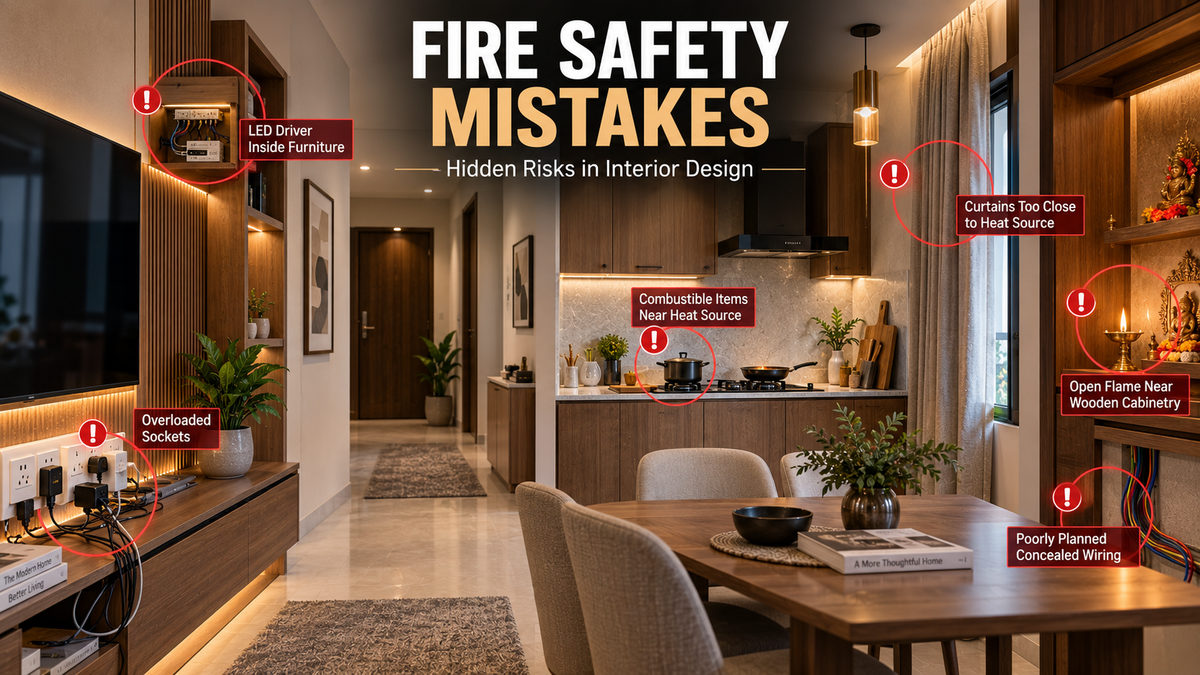
Interior design is often focused on colours, furniture, lighting, storage and finishes. But one important factor is sometimes considered too late: fire safety.
Modern homes contain extensive electrical wiring, appliances, decorative lighting, plywood, laminates, fabrics and rechargeable devices. Many of these elements become concealed after the interiors are completed.
Here are 10 common fire safety mistakes to avoid while designing your home.
1. Planning Electricals After Furniture
Electrical planning should happen before wardrobes, TV units and kitchen cabinets are finalised.
High-load appliances such as air conditioners, ovens, induction cooktops and water heaters require appropriate electrical provisions. Electrical work should always be carried out by qualified professionals.
2. Overloading Electrical Sockets
Too few electrical points often leads to extension boards and multiple adapters.
Instead, plan adequate sockets for TVs, workstations, kitchens and charging areas during the design stage.
Good interiors don't just hide wires—they plan them properly.
3. Incorrectly Concealing LED Drivers and Wiring
LED strips and profile lights are popular inside wardrobes, TV units and kitchens.
However, drivers, connections and wiring shouldn't simply disappear behind furniture without consideration for installation requirements, heat, inspection and future servicing.
4. Ignoring Kitchen Fire Risks
The kitchen combines heat, electricity, gas, oil and combustible materials.
Pay attention to hob placement, gas connections, appliance ventilation and electrical points. Built-in appliances should also be installed according to the manufacturer's clearance and ventilation requirements.
5. Ignoring the Puja Area
Puja units may combine wooden cabinetry with diyas, incense and camphor.
Open flames should be kept appropriately separated from combustible materials and should never be left unattended.
6. Assuming Fire-Retardant Means Fireproof
This is an important distinction.
Fire-retardant plywood is not fireproof.
Fire-retardant plywood is designed to meet defined fire-performance requirements under specified testing conditions. In India, IS 5509 relates to fire-retardant plywood.
Read: Fireproof vs Fire-Retardant Plywood: What's the Difference?
7. Selecting Materials Only by Appearance
A beautiful laminate or veneer doesn't tell you everything about the material underneath.
Interior materials should be selected based on:
Application + Moisture Exposure + Structural Requirement + Hardware + Safety Requirements
Where enhanced fire performance forms part of the project specification, appropriately specified fire-retardant materials can be considered as one component of the overall safety strategy.
8. Blocking Electrical Panels and Exit Routes
Furniture should not make important electrical equipment or evacuation paths difficult to access.
Plan shoe cabinets, decorative partitions and storage carefully around entrances, corridors and electrical distribution boards.
Conceal visually. Don't obstruct functionally.
9. Hiding Fire Safety Equipment
A fire extinguisher isn't particularly useful if nobody knows where it is or it cannot be reached quickly.
Appropriate fire-fighting equipment should be accessible and properly maintained. Homeowners should also understand their building's emergency exits and evacuation procedures.
For a more complete checklist, see Fire Safety Checklist for New Homeowners.
10. Believing One Product Makes a Home Fire-Safe
Perhaps the biggest mistake is looking for a single solution.
Fire-retardant plywood alone cannot make a home fire-safe.
Neither can an extinguisher or smoke alarm by itself.
A better approach combines:
Prevention + Detection + Appropriate Materials + Fire-Fighting Equipment + Clear Escape Routes
Fire safety works best as multiple layers rather than one product or precaution.
Conclusion
A premium interior should not only look beautiful—it should also be thoughtfully designed for safety.
Electrical wiring, appliance placement, lighting, material selection and escape planning should be considered before everything gets hidden behind finished furniture.
For projects where enhanced fire performance is required, Plyneer Club FR can be considered as part of the material specification, subject to applicable project requirements, product specifications and certification.
You can also read Fire Safety Norms in India and How Plyneer Club Plywood Complies.
Beautiful Interiors. Better Materials. Smarter Safety.
🌐 Plyneer
📞 +91 8861717273


